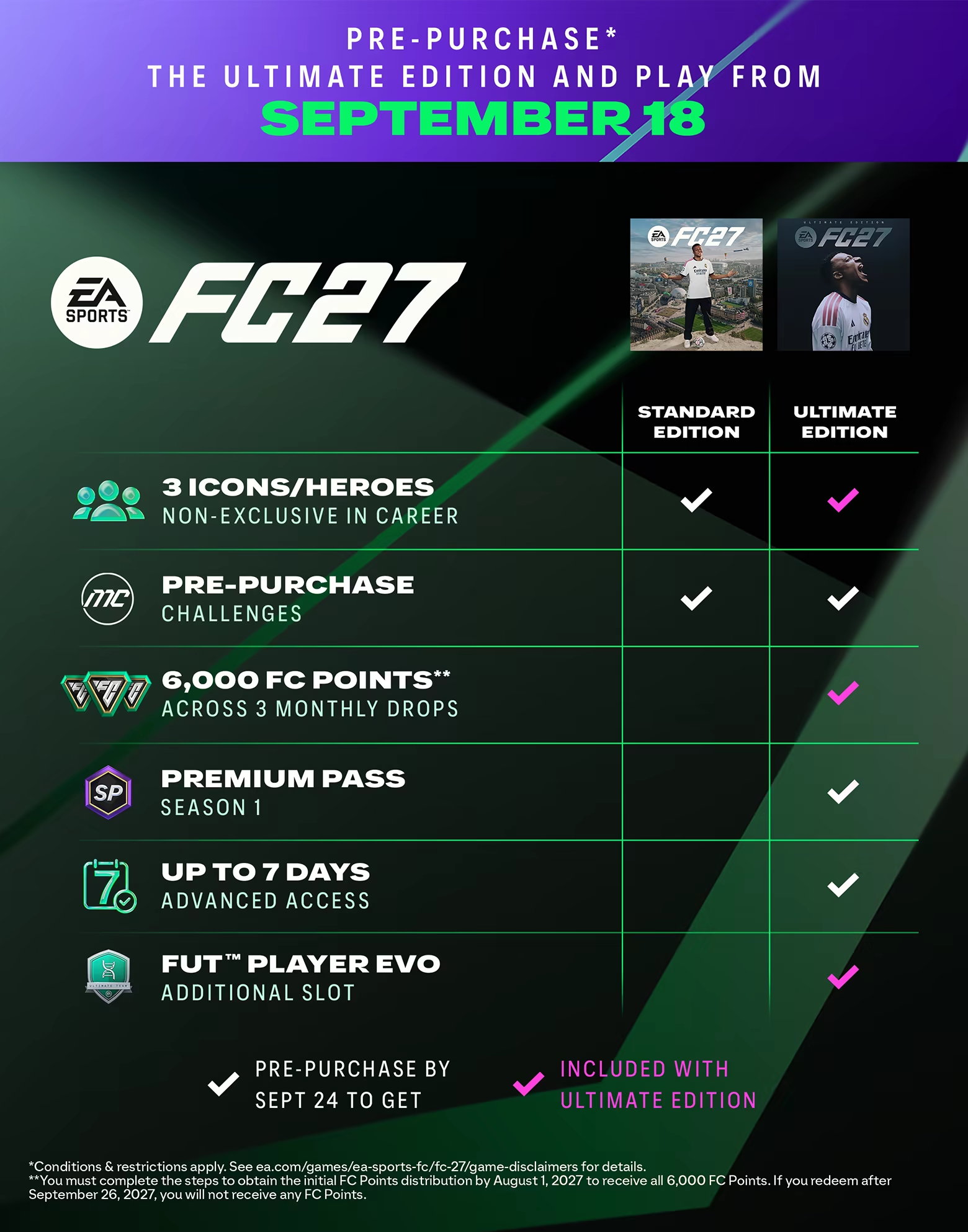
In EA Sports FC 27, the difference between a clean tackle and an avoidable red card often comes down to a few milliseconds of input lag. Whether you're chasing the top of the Rivals ladder or just want smoother matches in FUT Champs, here's the PC setup and controller configuration to put in place. Still deciding if this year's entry is worth it? Check our full EA Sports FC 27 review first.
Minimum and Recommended Specs
Minimum specs (720p, 60 FPS, Low preset)
- CPU: Intel Core i5-6600K or AMD Ryzen 5 1600
- GPU: NVIDIA GeForce GTX 1050 Ti or AMD Radeon RX 570 (4 GB VRAM)
- RAM: 8 GB dual-channel DDR4
- Storage: 100 GB free space
- OS: Windows 10/11 64-bit, fully updated
Recommended specs (1080p, 60 FPS, Medium preset)
- CPU: AMD Ryzen 7 2700X or Intel Core i7-6700
- GPU: NVIDIA GeForce GTX 1660 or equivalent
- RAM: 12 GB
- OS: Windows 10/11 64-bit, fully updated
Worth noting: the 100 GB of disk space required is a lot for a sports title. An SSD isn't listed as mandatory, but it noticeably cuts load times between FUT menus, which lean heavily on server requests.
Graphics Settings to Cut Input Lag
In competitive play, the priority isn't how good the pitch looks, it's how responsive your inputs are. A few principles to apply:
- Exclusive fullscreen mode rather than windowed or borderless: this is the single setting with the biggest impact on input lag and FPS, since the game no longer has to go through the Windows compositor.
- Low latency mode (NVIDIA Reflex or the AMD/Intel equivalent depending on your GPU): turn this on at all times to shrink the gap between your controller press and the action on screen.
- Avoid motion smoothing / frame interpolation (like "Smooth Motion"): these technologies generate in-between frames that add latency, a trade-off you can't afford in a game where tackle and shot timing is everything.
- Cap your FPS slightly below your monitor's refresh rate (for example 141 FPS on a 144 Hz display) to avoid tearing without turning on V-Sync, which adds latency of its own.
- Graphics quality: Medium is more than enough for a clean 1080p/60 FPS image; only go higher if your card clearly has headroom to spare, because competitive play is won by reading the game, not by admiring stadium reflections.
Controller and Camera Settings for Competitive Play
Two settings shape most of the competitive experience:
- Camera: the Co-Op view is the go-to choice for high-level players in FUT Champs and Rivals. Pulled back further than Tele Broadcast, it gives you a better read on runs and makes it easier to anticipate long balls defensively. The "Competitive" camera is one to avoid: it's too zoomed in and makes reading the pitch harder.
- Button layout: the Classic scheme remains the reference for most competitive players, since it maps defensive actions (tackle, contain, jockey) to buttons that feel natural and consistent with the muscle memory built up on previous entries.
- Custom profile: rather than sticking with the defaults, fine-tune shot and through-ball sensitivity individually in the advanced settings. The goal is to minimize "gut reaction" inputs that fire off in the wrong direction under pressure.
- Vibration: turn it off during long competitive sessions. It adds nothing to performance and just tires out your hand over extended ranked grinding.
Network and Online Stability Tips
In Ultimate Team, network latency matters just as much as local input lag. Go with a wired Ethernet connection instead of Wi-Fi, close any apps eating bandwidth in the background (updates, streaming), and if you're playing on PC through a powerline adapter or an unstable Wi-Fi setup, consider a USB Ethernet adapter: the improvement in ping consistency is often more noticeable than a graphics card upgrade.
Bottom Line
A modest recommended build (GTX 1660, 12 GB RAM) is enough to run EA Sports FC 27 cleanly at 1080p/60 FPS. The real room for improvement in competitive play lies elsewhere: exclusive fullscreen, low latency mode enabled, the Co-Op camera, and the Classic layout form the foundation of a controller setup built for climbing divisions.