Fire Emblem: Fortune's Weave is out now, exclusively on Nintendo Switch 2. Developed by Intelligent Systems with Nintendo, it's the 18th mainline entry in a series that has spent three decades defining tactical RPGs on consoles, and it lands with some of the highest review scores the franchise has seen since Three Houses in 2019.
The comparison to Three Houses isn't accidental. Fortune's Weave takes place in the same world, years after the events players explored on the Switch, and it reuses the same ambition: a sprawling campaign, multiple protagonists, and a story built to be replayed from different angles.
The Heroic Games and a fractured timeline
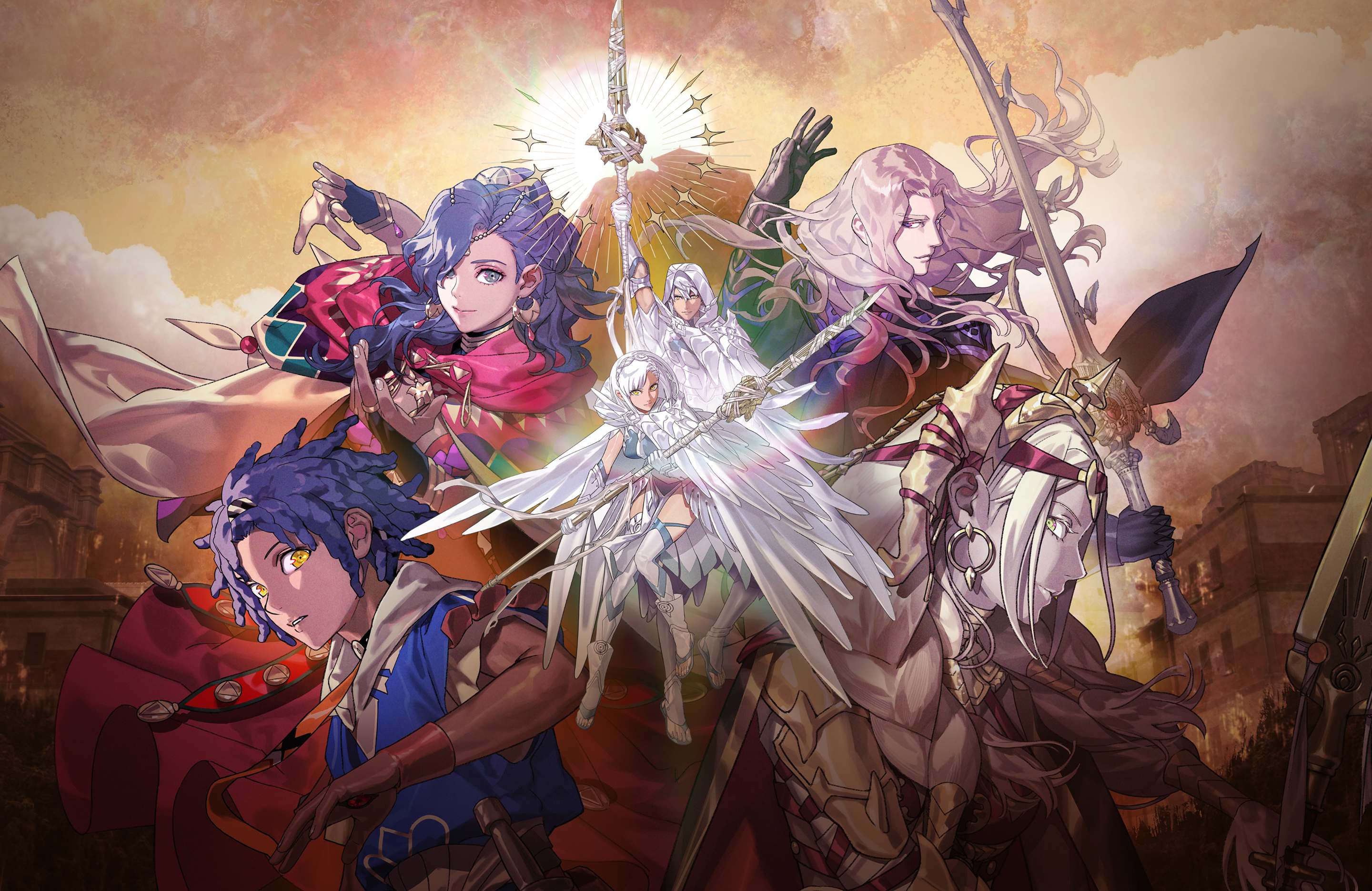
The setting is the Dagdan Empire, in the year 1454. The capital, Dagsion, hosts the Heroic Games, a tournament where the eventual winner is granted a single wish, whatever it may be. That premise pulls in four playable leads, each with a personal stake: Cai, a boy fighting to free his imprisoned father; Dietrich, a swordsman chasing an opponent strong enough to test him; Theodora, a queen pursuing a long-held dream for her homeland; and Leda, a musician driven by revenge.
Their tournament gets upended by Balor, a demon god whose return leaves Dagda in ruins. That's where the series' recurring figure, the goddess Sothis, steps in. She reaches out to a soul she recognizes and sends it into Dagda's past, in the year 1450, four years before the empire's collapse.
That soul, a character named Eshmel, is given a Mediator body by Zenon and Fortuna, a goddess capable of traveling through time. Fortuna's offer is the game's central twist: rather than confront Balor head-on in the present, Eshmel can go back and alter the fates of Cai, Dietrich, Leda, and Theodora before the timeskip, then bring the changed outcomes forward to the final battle. The result is a dual-timeline structure where decisions made in 1450 ripple into the 1454 endgame, layered on top of the four-route branching Three Houses fans will recognize.
What critics are saying
Review embargoes lifted ahead of launch, and the consensus is close to unanimous. The game currently sits at 89 on Metacritic, matching the score Three Houses posted seven years ago, while OpenCritic lists a 95% critic recommendation rate. Multiple outlets, including IGN, awarded it a perfect 10, and by some counts more than a dozen publications gave it top marks.
IGN's review put it plainly:
"Fire Emblem: Fortune's Weave builds upon its strategic arts in ways I couldn't have anticipated."
Critics praise the tactical combat's depth and how the four interlocking storylines pay off by the end. Where criticism appears, it targets pacing: some reviewers flagged a slow opening stretch and a campaign so dense with content that it risks overwhelming players expecting something closer in length to earlier entries. None of that has meaningfully dented the overall reception.
Key details at launch
- Release: September 17, 2026, exclusively on Nintendo Switch 2
- Developer: Intelligent Systems, with Nintendo
- Setting: The Dagdan Empire, in the same world as Fire Emblem: Three Houses
- Structure: Four playable protagonists, a dual timeline (1450 and 1454), and a tournament framework (the Heroic Games) tying their arcs together
- Critical reception: 89 on Metacritic, 95% recommended on OpenCritic, several outlets awarding a perfect score
A crowded month, a clear standout
Fortune's Weave isn't launching into a quiet release calendar. September 2026 has been packed, with Onimusha: Way of the Sword, Silent Hill: Townfall, and Aniimo all shipping within weeks of each other, as publishers rush finished games out before Grand Theft Auto VI dominates the fall conversation. Fortune's Weave shipped as a Switch 2 exclusive anyway, and the 89 Metacritic score suggests Nintendo trusts the franchise to sell hardware on its own.
Players will spend the coming months comparing routes and testing how the time-shifted consequences between 1450 and 1454 actually play out, the same process that kept Three Houses in the conversation for years after its own launch.