Verdict
One of the best gacha RPGs of its generation in terms of gameplay and art direction, partly undermined by a deliberately opaque economy. You stay for Talos-II and its factories, but you keep an eye on your wallet.
Arknights: Endfield isn't a sequel to Arknights, Hypergryph's cult tower defense, in the strict sense. It's more of a massive expansion of its universe into an entirely different genre: a semi-open-world action RPG blended with Factorio-style industrial management. Released on January 22, 2026 after several closely watched betas, the game has had seven months to settle its gameplay loop and face the question that systematically haunts ambitious gacha productions: does the free-to-play side live up to the promise of the creative side?
The essentials: Talos-II, somewhere between space opera and production line
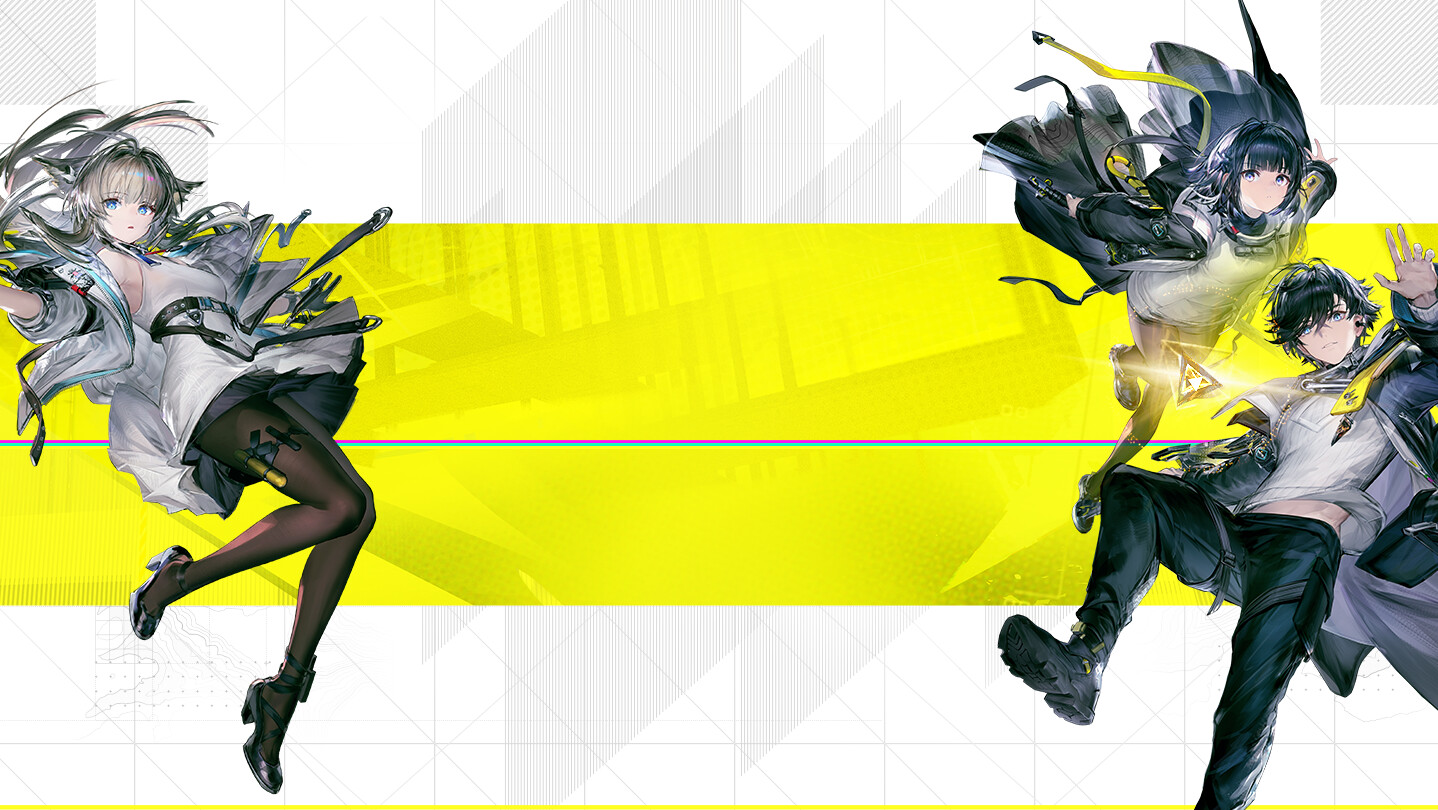
The pitch sets the action on Talos-II, a planet colonized a hundred and fifty-two years earlier by pioneers from Terra who arrived through a dimensional gate, the Aethergate, now destroyed, leaving these colonists to fend for themselves in a hostile world marked by recurring disasters and political tension between factions. The overall mood evokes a mix of Mass Effect for narrative cohesion and Horizon for exploring a world shaped by a past catastrophe. It's a solid, well-written foundation, carried by Hypergryph's signature art direction: careful character design, a well-crafted color palette, no visual missteps.
The game's real masterstroke is marrying two gameplay loops that, on paper, have nothing to do with each other. On one side, a real-time combat system where you control a team of four operators, switching between them on the fly to chain skills and combos: punchy, readable, with enough tactical depth to make you want to experiment with different team compositions rather than just charging in with your favorites. On the other, a base-building system that goes well beyond the genre's usual simple rest camp: resource gathering via mining nodes connected by ziplines, refining on dedicated machines, conveyor belts feeding entire manufacturing chains. You're not just playing a hero, you're literally becoming a factory manager, to the point that some players report sinking dozens of hours purely into optimizing their production lines, long after finishing the available story content.
The experience: a loop that holds up, performance that delivers
Seven months after launch, with several content updates already behind it, the game's overall structure has proven itself. The pacing alternates effectively between open exploration, scripted battles against rival factions or Talos-II's hostile wildlife, and calmer factory-management sessions, a genuine change of tempo that avoids the classic gacha RPG trap of endlessly repeating the same combat-loot-combat formula. Technically, the game runs remarkably well on PC, with a stable 1440p at 60 frames per second, an achievement rare enough in the genre to be worth highlighting: many AAA gacha productions struggle to maintain this level of smoothness once the open world is loaded with buildings and combat effects.
The construction side deserves its own paragraph: it's probably the most ambitious base-building system ever built into a mainstream gacha game, with a real learning curve (the first few hours can confuse players who came purely for the combat), but a depth that, once absorbed, offers a genuine game within the game. You can honestly spend an entire session redesigning a production chain without touching a single fight, and enjoy it just as much.
The limits: monetization keeps causing friction
The real sore spot, and it's a big one, is the economic system. Since launch, Endfield has drawn criticism for its multiple currencies, unclear drop rates, and pity caps that vary from banner to banner: a tangle of conversions that makes it hard to gauge the real value of a purchase before making it. Concretely, getting a banner's featured character can require up to 120 pulls, and additional copies push that ceiling even higher, with no pity carrying over between banners, frustrating enough for players tracking several characters at once. The game's lead has himself publicly acknowledged that the current system is perceived as confusing by the community and that Hypergryph is working to clarify it, a rare admission, though for now it remains mostly just that: an admission.
Over the long haul, the gameplay loop, solid as it is, also shows its limits once the novelty of discovery fades: repeated fights against the same enemy archetypes, and factory management that, while still satisfying, can become redundant for anyone not inclined to endlessly optimize. Nothing alarming, but a reminder that even the best gacha formulas eventually show the mechanics under the varnish once the hours pile up.
Who is it for?
For Arknights fans curious to see the universe explored differently, it's a near-unqualified success on the gameplay and storytelling front: the genre shift works better than one might have feared. For fans of Factorio or Satisfactory-style management games curious about an RPG and gacha wrapper, Endfield is clearly worth checking out, provided you accept the genre's monetization mechanics. On the other hand, for anyone already burned by gacha systems deemed too aggressive elsewhere, caution is still warranted: Hypergryph promises adjustments, but nothing has fundamentally changed at the time of this review.
Score: 7.6/10. Arknights: Endfield offers one of the most original and best-executed experiences in today's gacha landscape in terms of gameplay and art direction. But its deliberately complex economic system remains a real obstacle to an unreserved recommendation. Brilliant to play, harder to recommend without reservations when it comes to your wallet.
Pros
- Punchy real-time combat, four operators to swap between on the fly
- Base-building and factory management with rare depth for the genre
- Polished art direction and sci-fi setting
- Solid performance, stable 1440p/60fps on PC
Cons
- Deliberately confusing gacha system, multiple currencies
- Pity doesn't carry over between banners, high hard pity
- The gameplay loop can slow down once the novelty wears off